

How seasonal change can affect our minds


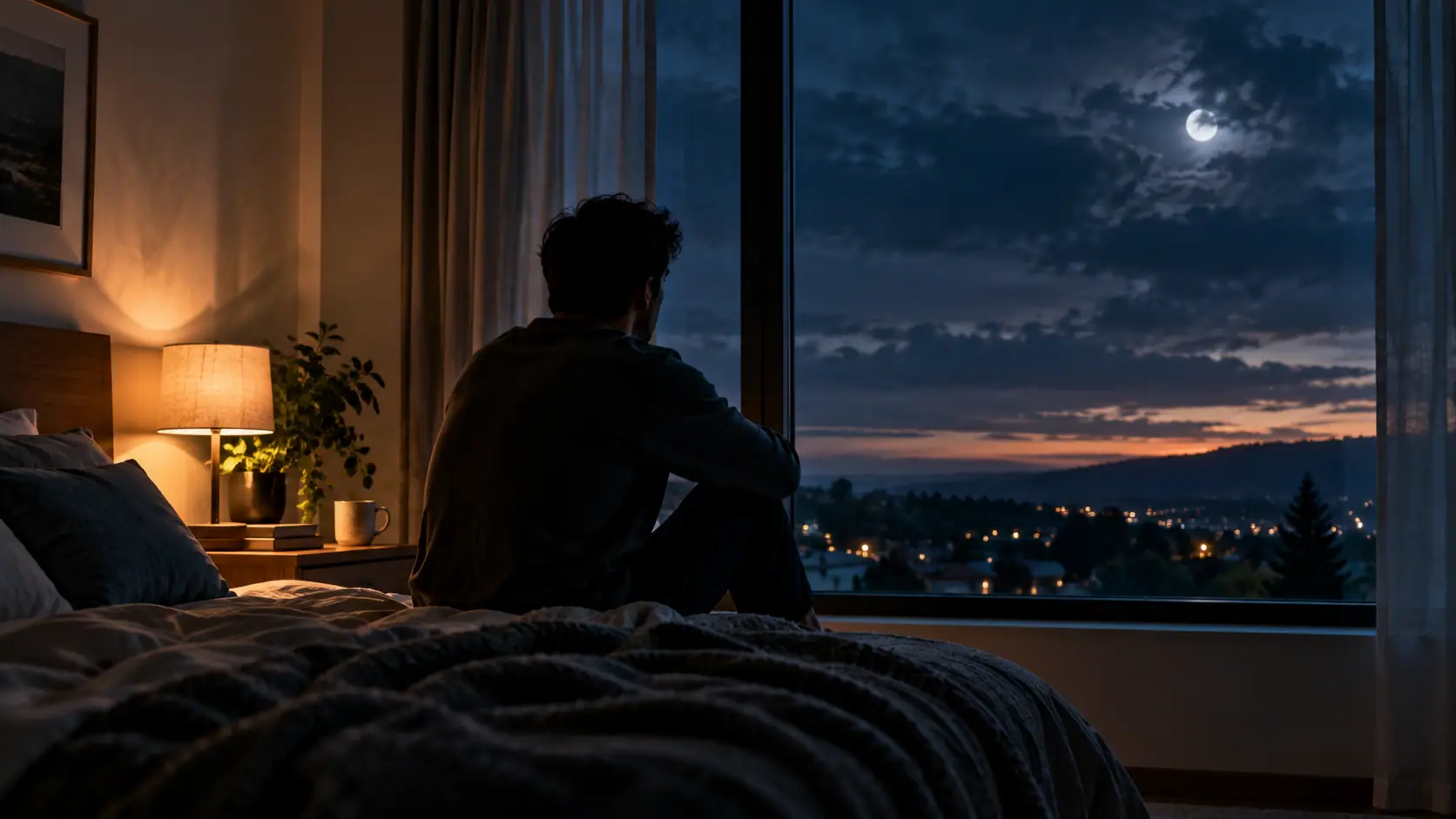
Contents
As the days grow shorter, we may begin to notice changes in how we feel. Daylight shortens, evenings arrive earlier, and the rhythm of everyday life begins to change. By late October, the clocks go back by an hour (Sunday 25th October this year), creating another adjustment to our sleep and waking patterns.
For many people, these changes are barely noticeable. For others, they can affect energy, motivation, sleep, and mood. Someone already experiencing depression, anxiety, or another mental health difficulty may find that symptoms become harder to manage as the structure of the day changes. For a person struggling with alcohol or another form of dependency, changes in routine and longer evenings can also alter the circumstances in which difficult emotions or habitual behaviours tend to arise.
This does not mean that autumn itself causes mental health problems. The relationship between seasons and psychological wellbeing is more complicated than that. Sometimes a change in the environment affects our biology and behaviour; and other times it simply makes difficulties that were already there more noticeable.
Why daylight matters
If getting out of bed begins to feel harder as autumn progresses, it is worth considering what has changed around you before assuming that you have simply lost motivation. Shorter days can affect the body’s internal timing, and this may influence sleep, alertness, and energy.
Light is one of the main signals that regulates our circadian rhythm (as referenced in the National Institute of General Medical Sciences factsheet on Circadian rhythms), the internal system that coordinates sleep and wakefulness over roughly 24 hours. Specialised cells in the retina detect light and relay information to the brain’s biological clock, which helps coordinate daily patterns in sleep, hormone release and other bodily functions.
As daylight hours decrease, our exposure to natural light may change considerably. Someone who leaves home in the dark and spends most of the working day indoors may receive much less daylight than they did during the summer, even if their working hours remain the same.
Light also influences the timing of melatonin, a hormone that helps regulate sleep. The relationship between daylight, serotonin and mood is more complex, but changes in light exposure are thought to contribute to seasonal affective disorder (SAD), a form of depression that follows a seasonal pattern. (See NHS, Seasonal affective disorder (SAD)). Its precise causes are not fully understood, and reduced daylight is only one part of the picture.
These biological processes help explain why seasonal change can affect how we feel, but they do not determine how everyone will respond. Some people notice little difference, while others experience changes in sleep, energy or mood that are more pronounced. The wider context matters too, including existing mental health difficulties, daily routines and opportunities for social contact.
It is therefore important not to interpret every difficult morning or period of low energy as a sign of SAD. The more useful question is whether the changes are persistent, whether they affect everyday life and whether they form part of a recurring seasonal pattern.
When the structure of the day changes
Seasonal change affects more than the amount of daylight we receive. It can also alter how we spend our time, how often we see other people and how easily we maintain the routines that support our wellbeing.
During summer, opportunities to be outdoors or meet friends may arise naturally because the evenings are lighter and the weather is more inviting. As autumn progresses, these activities can require more planning. Someone who previously went for a walk after work might come straight home instead, while informal social contact may gradually become less frequent.
These changes are not necessarily a problem in themselves. The difficulty is that, for someone already experiencing depression, anxiety or loneliness, a gradual reduction in activity and connection can make existing difficulties harder to manage.
Mood and behaviour influence one another. When we feel low or anxious, withdrawing from activities or other people can seem like the easiest option. Although this may offer temporary relief, it can also reduce opportunities for experiences that provide enjoyment, connection or a sense of achievement. Over time, that pattern can become difficult to interrupt.
Changes in routine can also affect people who rely on particular behaviours to manage uncomfortable feelings. If alcohol, drugs, gambling or another compulsive behaviour has become a familiar way of dealing with boredom, loneliness or anxiety, longer evenings and fewer planned activities may create more opportunities for that pattern to continue.
Seasonal change does not necessarily create these difficulties. Sometimes it changes the circumstances in which they occur, making existing patterns more noticeable. Recognising that distinction can help us understand what has changed, what may be maintaining the difficulty and where support might be useful.
The clocks go back, but our bodies still need time to adjust
On Sunday 25 October 2026, the clocks in the UK (and across most of Europe) go back by one hour as British Summer Time ends.
An hour may seem insignificant, but sleep is influenced by timing as well as duration. Our circadian rhythm responds to environmental cues, particularly light, and a change in the clock can temporarily shift the relationship between our usual schedule and our body’s internal timing.
Most people adjust naturally within a few days. Even so, a few simple measures can make the transition easier.
- Make daylight part of the morning: Natural daylight is one of the strongest environmental cues for the body clock. If possible, spending some time outdoors during daylight, especially earlier in the day, can help maintain a consistent rhythm. It does not have to involve strenuous exercise. A walk, sitting outside with a coffee, or simply finding a reason to be outdoors can provide useful exposure to natural light.
- Keep your sleep pattern reasonably consistent: Going to bed and waking at broadly similar times each day can help reinforce a regular sleep-wake rhythm. After the clocks change, it can be tempting to make large adjustments to compensate for feeling tired, but keeping your routine relatively steady may make the transition easier. The NHS also recommends consistent bed and waking times as part of managing seasonal affective disorder.
- Pay attention to the evening: The fact that it is dark outside does not necessarily mean that the body is ready for sleep. Artificial light and stimulating activities can continue to signal wakefulness late into the evening. A quieter, more predictable period before bed can therefore be useful, particularly for anyone whose sleep is already unsettled. This might mean dimming lights, stepping away from work or reducing screen use before going to bed rather than trying to compensate for tiredness by going to bed much earlier than usual.
- Be careful about using alcohol to wind down: Alcohol can make some people feel sleepy initially, but it can interfere with the quality and continuity of sleep. If drinking has become part of an evening routine, the earlier onset of darkness can make that pattern more pronounced without necessarily making the underlying difficulty any easier to manage. For someone already concerned about their drinking, the clock change can therefore be a useful opportunity to notice what role alcohol is playing in the evening, rather than simply treating increased tiredness as a reason to drink more.
When seasonal change becomes more than an adjustment
Feeling less energetic in November than in July does not necessarily mean that something is wrong. The important thing is to notice whether the change passes as we adjust to the season or whether it begins to affect how we feel and manage everyday life.
Seasonal affective disorder (SAD) is a form of depression in which symptoms follow a seasonal pattern, usually during the winter. According to the NHS, a diagnosis may be considered when someone has experienced depressive symptoms at a particular time of year for two years or longer. Symptoms can include persistent low mood, losing interest in things they would normally enjoy, tiredness, changes in sleep or appetite, and difficulty concentrating.
Not everyone who struggles during the darker months will have SAD. However, it is worth paying attention if you find yourself gradually pulling away from other people, struggling to concentrate at work, sleeping much more than usual or losing interest in things that would normally matter to you. These changes may be easy to dismiss at first, particularly if there seems to be an obvious explanation for feeling different.
Rather than judging how you feel on any one day, it can help to look at the bigger picture. Have things been getting harder over several weeks? Is your mood affecting your relationships, work or ability to enjoy everyday life? Have you noticed a similar pattern at this time of year before?
It is also worth considering what else might be contributing. Stress, difficulties in relationships, pressure at work, physical health problems or changes in alcohol or drug use can all affect how we feel, whether or not the seasons play a part. Recognising a seasonal pattern can be useful, but it is important not to assume that the time of year explains everything. If symptoms persist or begin to interfere with daily life, speaking to a healthcare professional can help you understand what may be happening and what support might be appropriate.
Sometimes autumn removes the things that were helping us cope
We do not always realise how much our surroundings contribute to how we feel. During the summer, we might spend more time outdoors, see friends more often or have more reasons to get out of the house. Our days may feel easier, not necessarily because anything has changed internally, but because we have more opportunities to connect with others, enjoy ourselves and take a break from our usual worries.
As autumn arrives, some of those opportunities become less frequent. Evenings can feel longer, making plans may take more effort, and we may find ourselves spending more time alone with our thoughts. Feelings that were easier to set aside when life was busier can become harder to ignore.
That does not mean we should try to fill every spare moment or keep ourselves occupied at all costs. Staying busy can be helpful, but it can also become a way of avoiding things we find difficult to face. What matters is understanding the difference between activities that genuinely support our wellbeing and those that simply keep uncomfortable feelings at a distance.
For some people, the quieter months offer a welcome chance to slow down. For others, they can bring a realisation that they have been relying on distraction, avoidance or substances to get through the day. Recognising that difference can help us understand what we need and whether some additional support might be helpful.
Seasonal change and dependency
Patterns of dependency are often closely linked to what is happening in someone’s life. The situations we find ourselves in, the people we spend time with, how we feel, and the ways we have learnt to cope can all influence when a behaviour becomes more difficult to manage.
For an individual who has come to rely on alcohol to unwind might find that the longer, darker evenings make drinking feel more appealing. Someone else may turn to a familiar behaviour when the house feels quiet, loneliness sets in, or there is little to distract them from anxious thoughts. The season itself may not be the cause. Rather, the change in routine or circumstances can make an existing pattern harder to resist.
This is one reason why simply focusing on stopping a behaviour may not be enough. It can be helpful to understand what tends to happen beforehand, what someone is feeling at the time and how they feel immediately afterwards. A behaviour that brings a little relief in the moment may be serving a purpose, even when its longer-term effects are harmful.
Over time, that relief can come at a cost. Sleep suffers, relationships become strained, and the original feelings that someone was trying to manage remain unresolved. Addressing dependency means looking beyond the behaviour itself to understand what keeps it going and helping the person find other ways to manage what they are experiencing.
What can help as the days become shorter
There is no need to treat autumn as something that has to be endured or overcome. For many people, a few adjustments are enough to maintain their usual sense of wellbeing.
It can help to make daylight a deliberate part of the day rather than waiting for it to happen naturally. Maintaining some structure around sleep and waking can also be useful; as mentioned above, this is particularly helpful during the transition following the clock change.
Staying connected matters too. If social contact tends to decrease during the darker months, maintaining relationships may require more planning than it did in summer. Similarly, keeping some meaningful activities in the week can help prevent a gradual withdrawal from the things that normally provide interest or connection.
If other mental health conditions such as anxiety or dependency are present, it may be worth paying particular attention to changes rather than assuming they are simply seasonal. Keeping a note of sleep, mood, energy, or substance use for a few weeks can sometimes make a developing pattern easier to recognise.
For people with an established seasonal pattern of depression, professional treatment may also be appropriate. Treatment for SAD can include talking therapies, medication, or light therapy, depending on the individual and their circumstances. Light therapy is not suitable for everyone, so anyone considering it should discuss it with a GP or appropriate healthcare professional first.
Knowing when to look beyond the season
The changing seasons are part of life, and some variation in energy and mood is entirely understandable. The important thing is not to pathologise every change, but neither is it to dismiss persistent difficulties as simply “the winter blues”.
If changes in mood, sleep, motivation, or behaviour continue, become more pronounced, or begin to affect relationships, work and everyday functioning, it may be time to look more closely at what is happening.
For someone experiencing depression, anxiety or dependency, seasonal change may be one part of a much bigger picture. Understanding that picture can make it easier to identify the right form of support, whether that involves speaking with a GP, working with a therapist, or considering more comprehensive residential treatment.
The darker months do not have to be a time when difficulties are simply tolerated. Sometimes they provide an opportunity to notice patterns that have been developing quietly and to consider what might help before those patterns become more established.
At Ibiza Calm, we believe that understanding the relationship between someone’s thoughts, emotions, behaviour, and environment is an important part of providing individualised mental health and addiction care. Seasonal change is only one influence, but recognising how it interacts with the rest of a person’s life can be an important part of understanding what they need.
You’re not alone on this journey.
The path to recovery starts with a small first step.