

A broader approach to treatment and wellbeing



Contents
Recovery from addiction and mental health difficulties is complex. For many people, meaningful change involves much more than understanding the thoughts, emotions and behaviours that have contributed to their difficulties.
Psychological and medical treatment remain central to effective care, but recovery also involves learning how to manage stress, reconnect with the body, express difficult emotions, develop healthier coping strategies, and build confidence in new ways of living.
At Ibiza Calm, we have always believed that there is value in creating opportunities for clients to engage with recovery in different ways. Alongside individual psychotherapy, group work and medical care, our programme incorporates a range of complementary therapies and experiential approaches.
These are not intended to replace evidence-based clinical treatment. Rather, they can provide additional opportunities for clients to practise, explore and experience some of the concepts being addressed within their therapeutic work.
Looking beyond talking therapy
Talking is an important part of psychological treatment. Being able to understand patterns of behaviour, explore underlying experiences and develop insight can be an important step towards recovery. However, not everything is easily accessed through conversation.
Some people find it easier to explore emotions through creativity. Others respond to movement, music, nature, or working with animals. For someone who has become disconnected from their physical or emotional experience, an activity that encourages greater body awareness may provide another route into therapeutic work.
This does not mean that every approach will be helpful for every person. A central part of individualised treatment is understanding what is appropriate for each client and how different interventions can complement their wider programme of care.
Equine therapy and developing awareness through connection
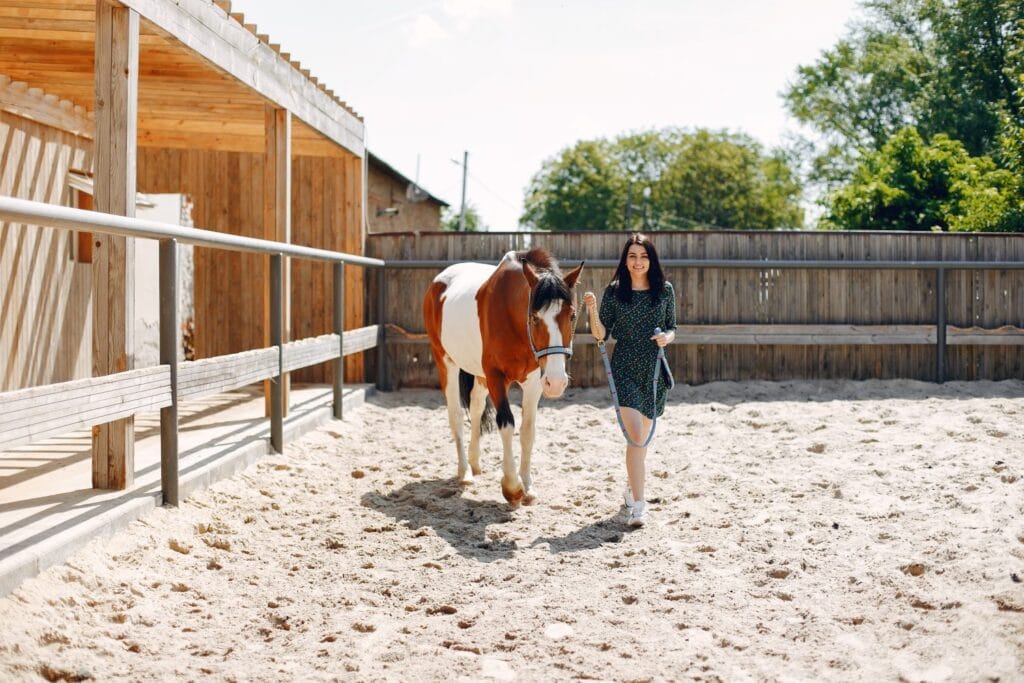


Equine therapy is one of the established complementary approaches within the Ibiza Calm programme.
Working alongside horses can create opportunities to explore communication, boundaries, trust and emotional awareness in a very different setting from the therapy room. Horses respond to changes in body language and behaviour, which can encourage clients to become more aware of their own responses and the impact they have on others.
Read more about the role of equine therapy in recovery.
Art therapy and finding another language for emotions
Creative expression can provide an alternative way of exploring experiences that may be difficult to articulate. Within art therapy, the focus is not on artistic ability or producing something that looks a particular way. The creative process can instead provide a space for reflection, expression and exploration, with the therapeutic relationship remaining central to the work.
For people who find it difficult to put complex emotions into words, working creatively can sometimes provide another route into material that might otherwise remain difficult to access.
Art can also offer an opportunity to slow down and focus attention on the present moment, which may be particularly valuable for clients who are accustomed to distraction, avoidance or living with a high level of internal activity.
Music therapy and the role of sound
Music can also provide a different route into therapeutic work. Music therapy uses musical experiences within a therapeutic relationship to support emotional, psychological and social wellbeing. It can involve listening, creating, improvising or responding to music, depending on the individual and the aims of the work.
Music can evoke memories and emotions, facilitate communication and create opportunities for connection. For some people, particularly those who struggle with verbal expression, this can offer a valuable additional means of engaging with their internal experience.
At Ibiza Calm, art therapy and music form part of our wider programme alongside other creative and experiential approaches.
Sound baths and stillness
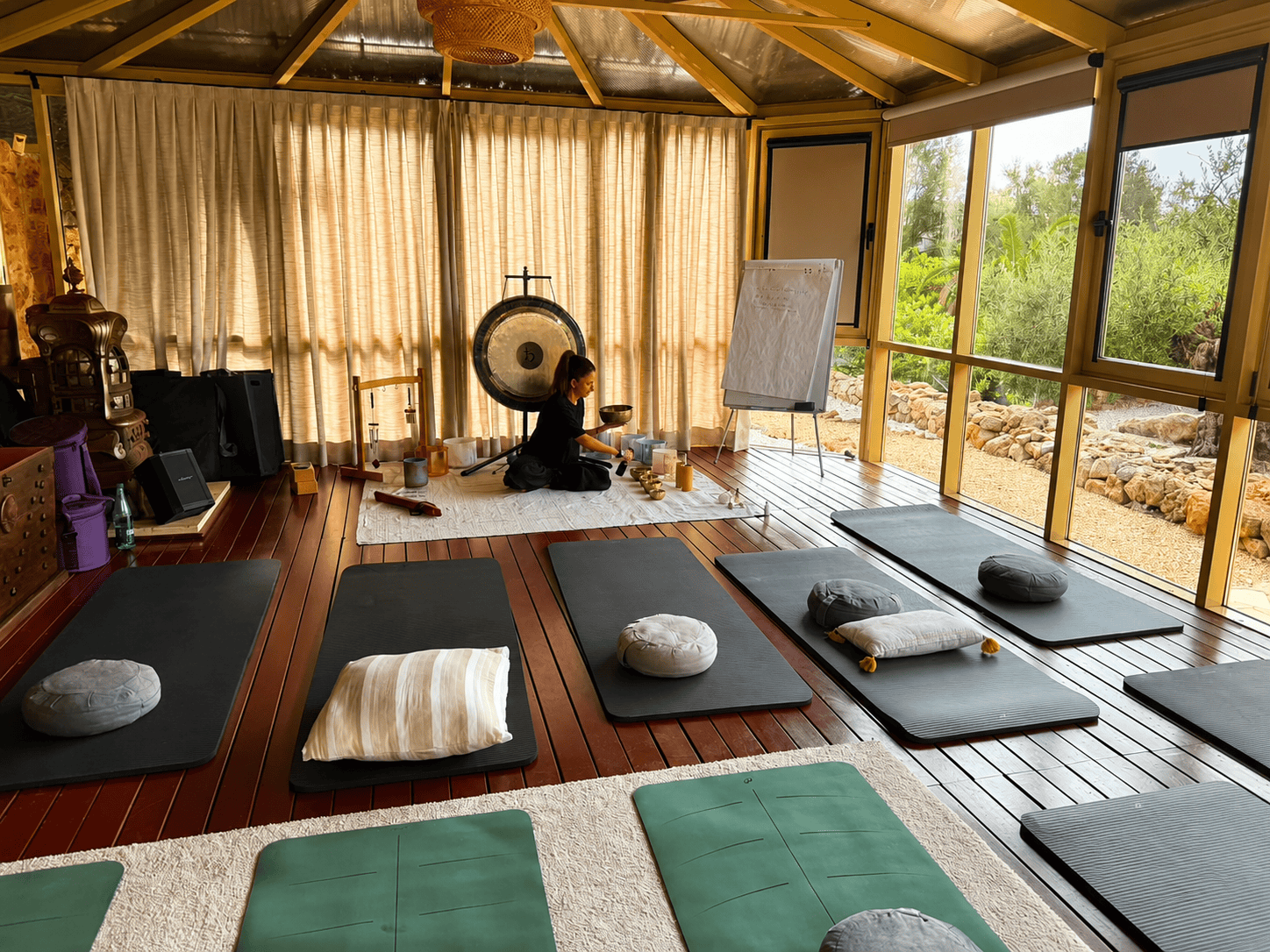
Complementary practices have long formed part of the wider programme at Ibiza Calm, offering clients different ways to explore relaxation, awareness and the connection between physical and psychological wellbeing. Sound baths are one of the practices available to clients.
A sound bath is a relaxation and mindfulness practice in which participants usually lie or sit comfortably whilst listening to sounds produced by instruments such as singing bowls, gongs and chimes. Rather than requiring participants to actively perform a task, the experience encourages them to listen, slow down and notice what is happening in their body and mind.
For someone who has spent considerable time in a state of stress or emotional agitation, simply experiencing a period of stillness can be unfamiliar. A sound bath can provide a gentle opportunity to pause and step away from the demands of everyday thought and activity.
It provides an opportunity for relaxation, present-moment awareness and physical stillness alongside the client’s core therapeutic work. This can also be particularly relevant for clients who find conventional mindfulness or meditation difficult. A sound-based practice provides an external point of focus, which may make it easier to settle attention without requiring someone to immediately sit with an otherwise busy mind.
Qigong and mindful movement

Qigong is an ancient Chinese mindful movement practice that combines slow, flowing movements with rhythmic breathing and focused attention.
Traditionally, the practice is understood as a way of cultivating and balancing Qi, often described as vital life energy. Today, qigong is also practised as a gentle form of mindful movement, bringing together physical awareness, breathing and a meditative state of mind.
Unlike more physically demanding forms of exercise, qigong generally uses gentle, flowing movements that can be adapted to different abilities.
For clients experiencing chronic stress, anxiety or emotional dysregulation, practices that combine movement and attention may provide an opportunity to develop greater awareness of physical sensations and patterns of tension. There is some emerging evidence for qigong as an approach to stress management.
Qigong offers another way to work with the connection between body and mind, giving clients an opportunity to slow down, focus their attention and explore a different form of mindful movement as part of their individual programme.
Exploring new ways of thinking through LEGO® Serious Play®
This year, we have also introduced clients to LEGO® Serious Play®, an approach that may initially seem quite different from the therapies traditionally associated with mental health and addiction treatment.
LEGO® Serious Play® uses hands-on construction as a way of encouraging creative and structured thinking. The approach is designed to help individuals and teams explore challenges and ideas through building, rather than relying solely on conventional discussion. The facilitator’s approach describes this as combining creativity, structure and purpose, using hands-on thinking to turn challenges into opportunities.
Within a residential treatment environment, activities such as this can offer clients another way to engage with ideas, communication and problem-solving. LEGO® Serious Play® is a different kind of experience, offering clients an opportunity to step away from more traditional forms of discussion and engage with ideas in a practical and creative way.
For clients who may have spent years operating within established patterns of thinking and behaviour, being encouraged to approach a problem differently can itself be a useful experience. It can create space for curiosity, participation and new perspectives, whilst offering another way to engage with the wider therapeutic environment.
Recovery also happens through experiences




Our approach has also expanded beyond activities that would traditionally be described as therapy.
Spending time outside the treatment environment can provide opportunities to practise social interaction, flexibility and presence in a different context. This year, clients have also had opportunities to spend time out on a boat, experiencing Ibiza from a different perspective and sharing an activity away from the usual residential setting.
These experiences are not simply recreational additions to the programme. Time away from the therapy room can create opportunities to observe how clients respond to unfamiliar situations, interact with others, manage expectations and experience enjoyment.
See more about our time spent out on the boat in our blog, Finding connection on the water.”
Why complementary approaches have a place in treatment
The value of complementary approaches is not necessarily found in the activity itself, but in the opportunities they create for clients to engage with different aspects of their wellbeing.
They can give clients opportunities to:
- Develop greater awareness of physical sensations, emotions and behavioural responses.
- Practise relaxation and stress-management techniques.
- Explore emotions through creative or non-verbal forms of expression.
- Develop confidence in unfamiliar situations.
- Experience healthy forms of pleasure, connection and achievement.
- Practise communication and interpersonal skills.
- Discover activities that may become sustainable parts of life after residential treatment.
- Experience themselves differently from the identity they may have developed around addiction or mental health difficulties.
Perhaps most importantly, they can help translate therapeutic insight into lived experience. A client may understand intellectually why they need healthier ways to manage stress. Experiencing a different way of responding to stress and discovering that it is possible to feel calm without relying on a substance or compulsive behaviour, is another step altogether.
Complementary approaches can therefore sit alongside the core therapeutic programme, providing opportunities to practise new skills, experience different ways of responding and begin to incorporate healthier patterns into everyday life.
A broader therapeutic environment
Residential treatment provides something that many other forms of support cannot: time and space to work on recovery across different areas of a person’s life.
The benefit is not necessarily found in any single therapy or activity. It can emerge from the combination of approaches, the therapeutic relationships surrounding them and the opportunity to practise new behaviours repeatedly within a safe and structured environment.
At Ibiza Calm, this means that a client’s programme can include psychotherapy, group work and medical care alongside equine therapy, art and music therapy, mindful movement, sound baths and a range of experiential activities.
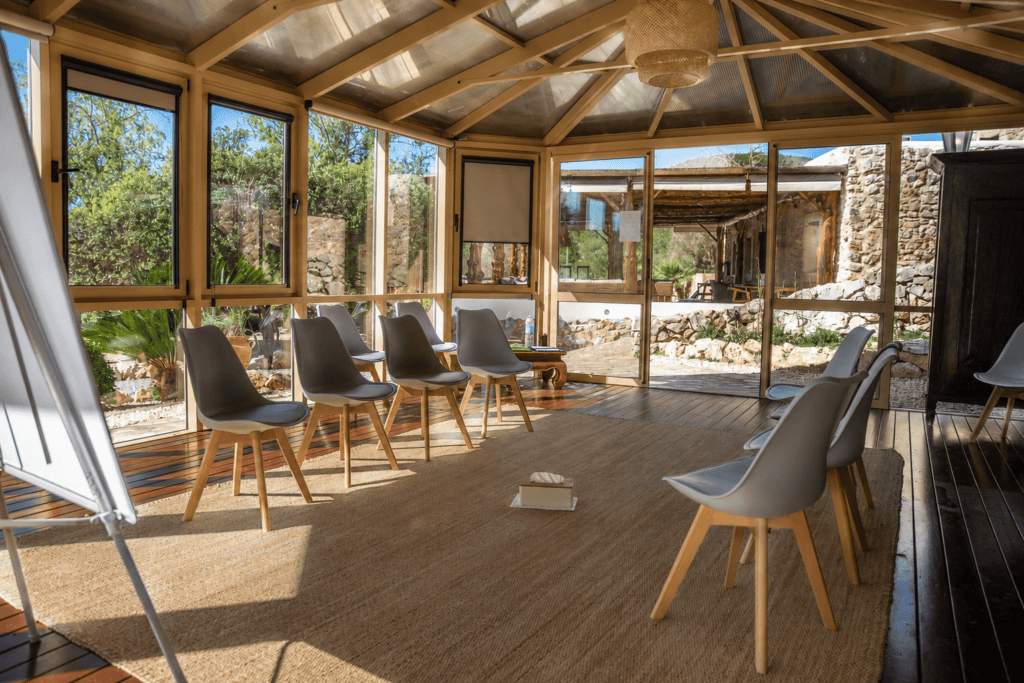
Sometimes, however, it is not the activity itself that becomes most significant. It may be the time afterwards, when clients are sitting together, talking informally or simply sharing the same space.
These quieter moments can allow relationships to develop naturally and help people recognise aspects of their own experiences in one another’s stories.
Offering a range of shared experiences also gives clients more opportunities to connect beyond the formal therapeutic setting. Over time, this can help the group begin to gel, reduce feelings of isolation and create a sense that recovery does not have to be faced alone. In this way, the broader therapeutic environment is shaped not only by the therapies and activities on the programme, but also by the everyday interactions that take place around them.
The intention is not to create an endless list of treatments. It is to recognise that people engage with recovery in different ways. For some, a conversation with a therapist may open something important. For another person, it might be a piece of music, time spent with a horse, making something with their hands, moving slowly through a qigong practice or discovering that they can enjoy an experience on the water without alcohol.
These experiences do not replace the clinical work. They can help bring that work into everyday life.
Recovery is about developing a life beyond treatment
The experiences clients have during residential treatment can become part of a much bigger process of understanding what helps them live differently.
Trying something new, whether that is working with a horse, creating something through art, listening to music, practising qigong, taking part in a sound bath or simply spending time with others in a different environment, can help clients discover interests, strengths and ways of managing themselves that they may not have considered before.
Over time, these experiences can contribute to a broader understanding of what supports their wellbeing and what they may want to carry forward after residential treatment.
Complementary and experiential approaches are one part of that process. They offer different ways to engage, reflect, connect and practise. Alongside the core clinical programme, they can help clients begin to translate insight into everyday experience and develop a more varied set of resources for life beyond treatment.
At Ibiza Calm, we believe that comprehensive treatment should make room for both clinical depth and meaningful experience.
Recovery does not happen in one particular way. Creating the space to discover what helps each individual engage with it can be an important part of the work.
You’re not alone on this journey.
The path to recovery starts with a small first step.